
BLOG
Is Recovery-Oriented, Involuntary Psychiatric Treatment Possible?
A roadmap for responsible, ethical, and individualized intervention:
America is debating expanding involuntary treatment for people with serious mental illness and/or addictions who are experiencing homelessness. The recent executive order "Ending Crime and Disorder on America's Streets" reignited that debate by urging states to lower the threshold for civil commitment of "appropriate" people into treatment facilities for "appropriate" periods of time.
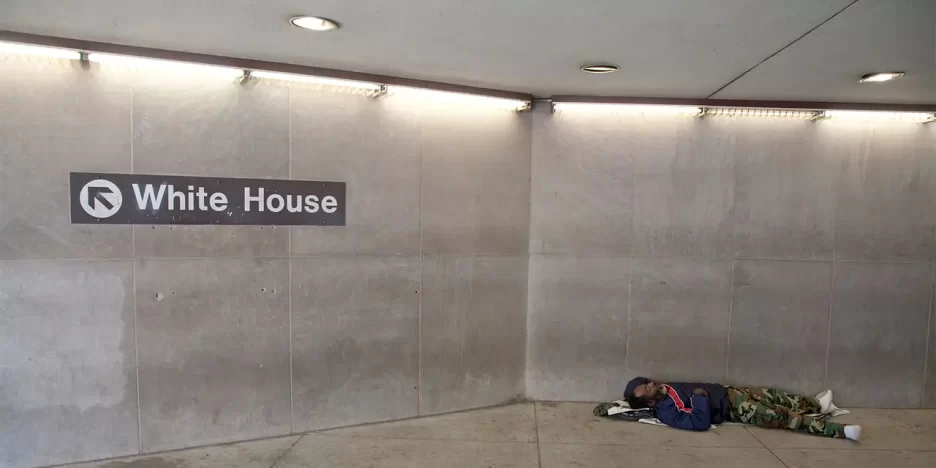
The order highlights a real problem: too many people with severe mental illness, many with co-occurring substance use disorders, remain chronically unsheltered, deteriorating in full public view, cycling between emergency departments, jail cells, and sidewalks without ever receiving meaningful care. Current practice, which often limits involuntary intervention to brief periods of confinement only as a response to imminent danger, can leave profoundly ill individuals without care until catastrophe occurs. This is a disservice not only to individuals, but to families, other support systems, and communities.
But the order also raises serious concerns -- about the risks of overreach, compromise of civil liberties, and re-traumatizing vulnerable individuals. Advocates are confronted with a challenge and opportunity: Can we build a system in which involuntary interventions for the most vulnerable individuals are an expression, not a rejection, of recovery, autonomy, and dignity?
We believe the answer can be yes. Our committee is currently exploring: Under what conditions can involuntary treatment be person-centered, recovery-oriented, and ethically justified -- versus harmful -- for people with severe mental illness and/or substance use disorders who are experiencing homelessness?
A New Framework: Person-Centered, Recovery-Oriented Involuntary Interventions:
We present two foundational ideas:
- There is an important role for involuntary interventions for a small but significant group of people with the most severe mental illnesses and/or addictions who are experiencing homelessness and cannot care for themselves.
- Poorly designed or overly broad involuntary interventions are harmful, unproductive, and often re-traumatizing.
A balanced system recognizes that involuntary care, when used appropriately and at appropriate times, is not an abandonment of recovery principles -- it is sometimes the only way to give someone the chance to recover.
We offer three guiding principles for involuntary interventions:
Person-Centered
Involuntary intervention should never be justified simply because someone is homeless and visibly ill. The intervention must match this person's risks and needs at this time, connected to the person's inability to provide for their own health and safety, based on assessment by trained clinicians following evidence-informed guidance.
Recovery-Oriented
The purpose of involuntary intervention is not containment -- it is opportunity. It is a chance to stabilize, engage, and begin a process toward the person's own meaningful life goals. Every person, no matter how impaired, deserves a chance at recovery.
Continuity
Recovery is relational. Involuntary care works best in the context of ongoing supportive relationships -- with clinicians, peers, and community support. The interventions should strengthen those connections, not sever them.
A Roadmap for Responsible Involuntary Care:
A balanced system therefore requires a continuum of interventions -- from the briefest crisis responses to extended care with structured oversight. Each step must be matched to the person's needs and grounded in rights protections and recovery principles.
Acute Interventions (3–5 days)
Used when someone presents immediate risk or grave disability -- defined not as homelessness alone, but inability (due to a mental illness and/or substance use disorder) to provide adequately for food, clothing, shelter, personal safety, or necessary medical care. The goals are acute stabilization and engagement with continuing person-centered, recovery-oriented care, not simply "looking better" in a controlled environment.
Intermediate Interventions (7–30 days)
For individuals who, after an acute hold, remain unable to return safely to the community and refuse voluntary care. Here, the focus is deeper stabilization, relationship-building, and development of a realistic continuing-care plan. Sometimes the work looks like "harm reduction": helping someone survive more safely even if not yet ready to accept housing or abstinence.
Extended Community Interventions (Assisted Outpatient Treatment)
For individuals who can return to the community but require oversight to stay connected to treatment and avoid relapse into grave disability. Assisted outpatient treatment, if recovery-oriented and relationally grounded, can offer a less restrictive alternative that promotes stability without institutionalization.
Extended Interventions With Placement
For an even smaller but perhaps more important subgroup who need longer-term, structured care in intensive treatment environments. Recovery orientation here means ensuring that care is not custodial or stagnant: individuals must have pathways to gain skills, maintain relationships, and transition to community settings when ready -- sometimes with continued oversight.
A Comprehensive Housing Continuum
None of these interventions will work without real housing options. Many people would accept housing if it matched their preferences: independent "wet" housing with supports, congregate "damp" housing that helps prevent harm from ongoing substance use, or highly structured sober-living environments. Forcing people only into models they reject -- while failing to build models they might accept -- is a recipe for failure.
The Root Cause We Cannot Ignore:
While people with serious mental illness and substance use disorders are overrepresented among those who are chronically homeless, the broader homelessness crisis in the U.S. is driven by the lack of affordable housing. Improving clinical services for those most impaired is morally essential -- yet will not, by itself, solve homelessness.
Without investment in housing, even the best-designed system of care can only do so much.
The Path Forward:
Clinicians, advocates, and policymakers must work together to build a balanced, recovery-oriented system for involuntary care, with guardrails to prevent overreach. That means:
- Clear guidance for first responders and clinicians
- Robust procedural protections
- A full person-centered, recovery-oriented continuum of care
- Housing options that people actually want
This effort will require political will, fiscal investment, and cross-sector collaboration. But the cost of doing nothing -- or doing the wrong things quickly -- is far higher.
Involuntary care is not inherently oppressive, nor is it inherently therapeutic. It is a tool. It can be misused to control, shame, or marginalize -- or it can be used, sparingly and carefully, to extend a lifeline to people who cannot reach for one themselves.
The task before us is to build a system where that lifeline is extended wisely, ethically, and always with an eye toward the person's humanity and hope.
Visit Our Blog